
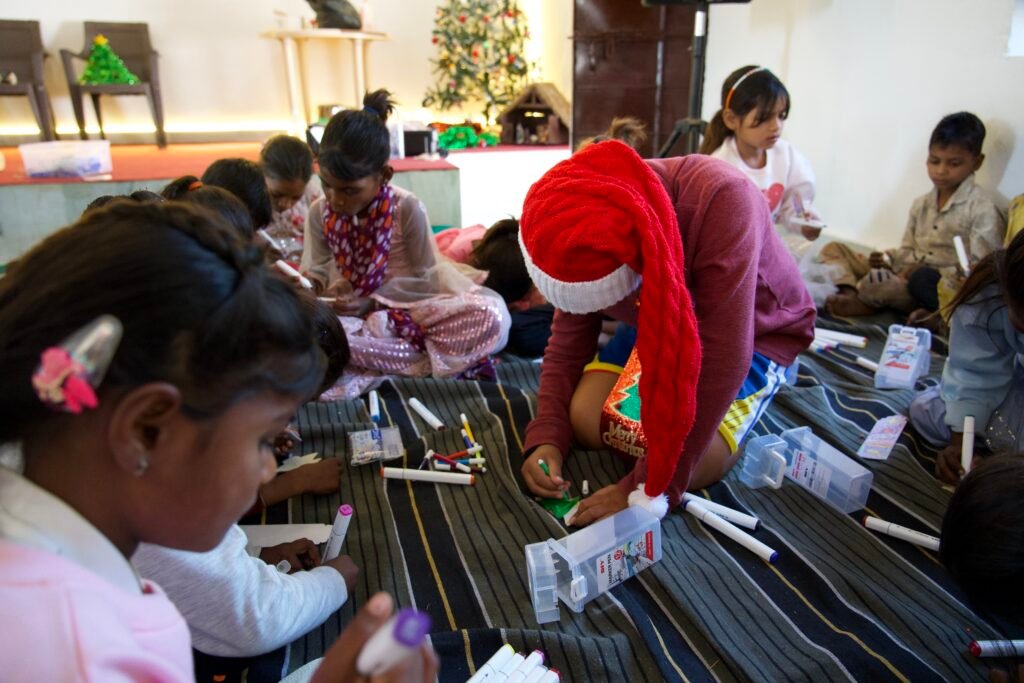
Why We Do What We Do
We didn’t start with a nonprofit. We started with relationships that were already two decades in the making, in communities we kept coming back to because we couldn’t walk away.
Our Story
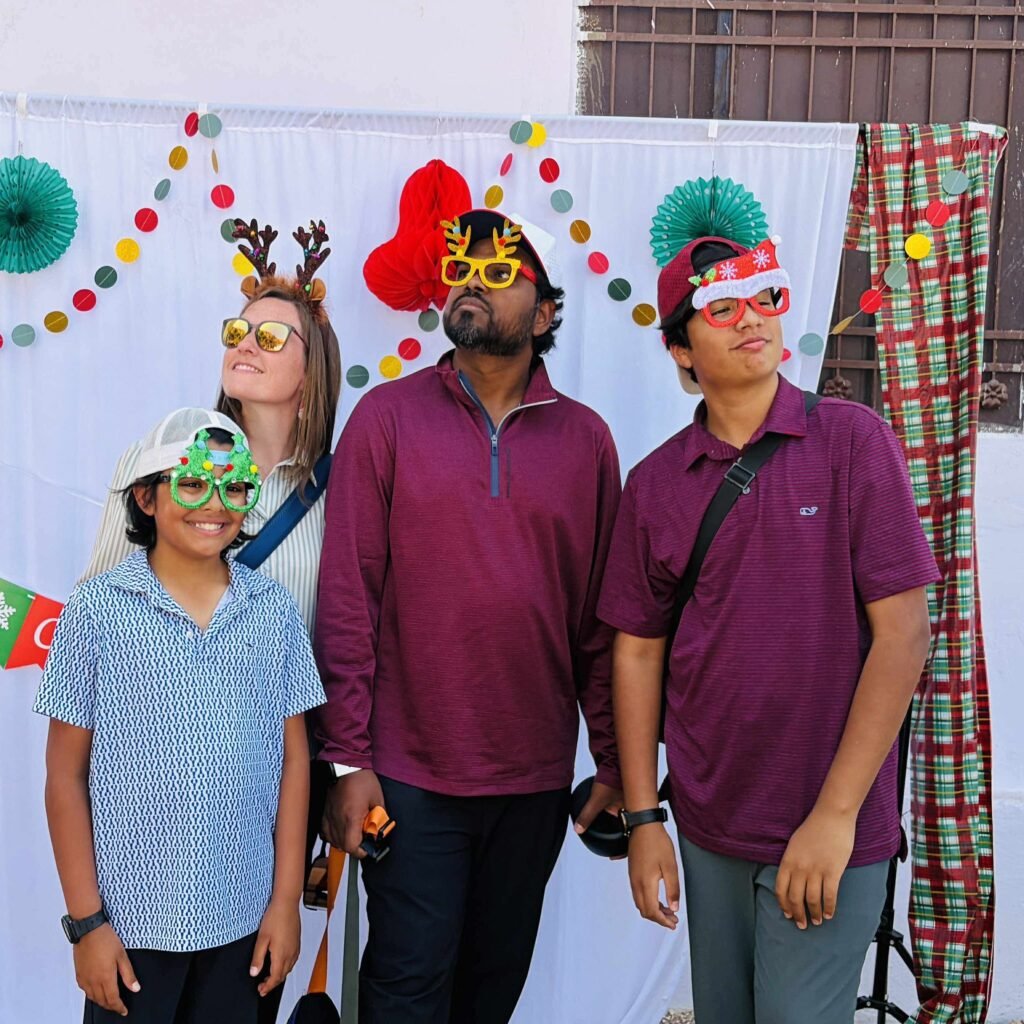
We are Kelly and Narendra, founders of The Boundless Initiative.
Our connection to India started simply, the way most real things do. Kelly came in 2007 and ended up at a hostel in Ajmer where a group of kids completely took over her heart. She couldn’t stop thinking about them after she left, and she kept coming back. Narendra grew up in Rajasthan, which means the poverty, the gaps in healthcare, the malnourishment in rural communities were not statistics to him growing up, they were just life around him. His roots and Kelly’s persistence eventually found each other, and what we share is a sense of responsibility toward these communities that neither of us could talk ourselves out of.
Kelly is a registered nurse with a background that spans bedside clinical nursing and public health, and during her time in India she worked closely with community members on health and wellness needs. At one point she worked alongside a visiting nursing team for a week, and there was a moment from that time that has never left her. She was cleaning the wounds of a man with leprosy, pulling maggots out, wrapping gauze around his feet, and she thought, this won’t change anything. His wounds will look the same again soon. That moment became the foundation of how we think about this work. Bandages matter in the moment, but what actually changes lives is education, nutrition, sustainable systems, and real opportunity. We don’t have all the answers, but we know that much.
Narendra served eleven years in the US Army after growing up in India, and that combination of deep local roots and years of institutional accountability shapes how he approaches this work. He can walk into a village in rural Rajasthan and build trust in ways that take most outside organizations years, because he is not an outsider.
We formalized The Boundless Initiative because we reached the limit of what two people alone can do, and because the vision was always bigger than two people. We believe the model we are building in rural Rajasthan can be applied to more villages, more communities, across India and Nepal and beyond. The structure exists to make that possible.
This work is also something our sons, Micah and Caleb, are growing up inside of. They travel with us, serve alongside us, and are learning firsthand what it looks like to live responsibly, give generously, and build something meaningful with the resources they’ve been given. As they build their own projects, giving back is not an add-on, it’s part of the foundation. We want them to understand early that compassion, impact, stewardship, and integrity matter as much as success.
How We Work
The easiest thing to do in this kind of work is show up with a solution and leave. Drop supplies, build something, write a check, move on. We’ve seen what that produces and it isn’t change, it’s dependency. A cycle where the same families need the same help next year because nothing underneath actually shifted.
The harder thing, and the thing we are committed to, is staying long enough to understand what a community actually needs, which is not always what’s visible from the outside and not always what people know to ask for. In rural Rajasthan, generations of scarcity have taught families to manage with whatever partial solution is available because a full solution has never been on the table. Part of our work is simply being present long enough, and trusted enough, that people feel safe imagining something different.
Projects start with listening, not with a predetermined program. We ask questions, we pay attention, and we let what we learn shape what we do next.
Every dollar we raise goes directly toward materials, labor, and implementation. We are transparent about costs because we think donors deserve to know exactly what their money did. We are a young organization and we are honest about that too. As we grow, our structure will grow with us, but the commitment to direct, accountable use of funds is not something we are willing to negotiate on.
The goal is never to be needed forever. It’s to work ourselves out of a job in each community by building something that lasts without us.
Where We Serve
Our work is rooted in rural Rajasthan, India, and that is not an accident. It is where Narendra grew up, and it is a region where the need is well documented. According to NITI Aayog’s Multidimensional Poverty Index, nearly 30% of Rajasthan’s population is multidimensional poor, meaning deprived across income, education, health, and basic living standards, with rural poverty running at nearly double the urban rate. Malnutrition in rural communities here has been described by researchers as a silent emergency, one that traps generations in cycles of poverty when left unaddressed. UNICEF also identifies deeply entrenched social norms in the region, including barriers that disproportionately affect women and girls, as ongoing challenges to social development. These are the communities we work inside of, and the reason we believe this work requires long-term presence rather than short-term programs.
We also have longstanding relationships in Nepal and expect our work to expand there as those partnerships develop. As we grow, we hope to bring this model to other regions of India as well, where similar needs exist and the right relationships can be built.